
Choosing bridesmaid dresses is one of the most exciting parts of planning your wedding, but there are more decisions involved than you might expect. From selecting the right color and fabric to coordinating sizes, ordering timelines, alterations, shoes, and accessories, having a plan can make the entire process much easier. Before you start browsing a bridesmaid dress store, creating a bridesmaid dress checklist can help you stay organized while making sure every member of your bridal party feels confident and comfortable.
What should be included in a bridesmaid dress planning checklist? Your checklist should cover your wedding color palette, dress styles, fabrics, sizing, ordering deadlines, alterations, shoes, accessories, and final fittings. Ideally, bridesmaid dress planning should begin several months before the wedding so there is enough time to make decisions without feeling rushed.
The good news is that bridesmaid dress shopping doesn't have to become another stressful item on your wedding planning list. With the right timeline and a few important decisions made early, you can create a cohesive bridal party look while still enjoying the process!
1. Start With Your Overall Wedding Vision
Before looking at individual dresses, think about how you want your entire wedding to feel. Bridesmaid dresses should complement the celebration rather than feel like a completely separate design decision.
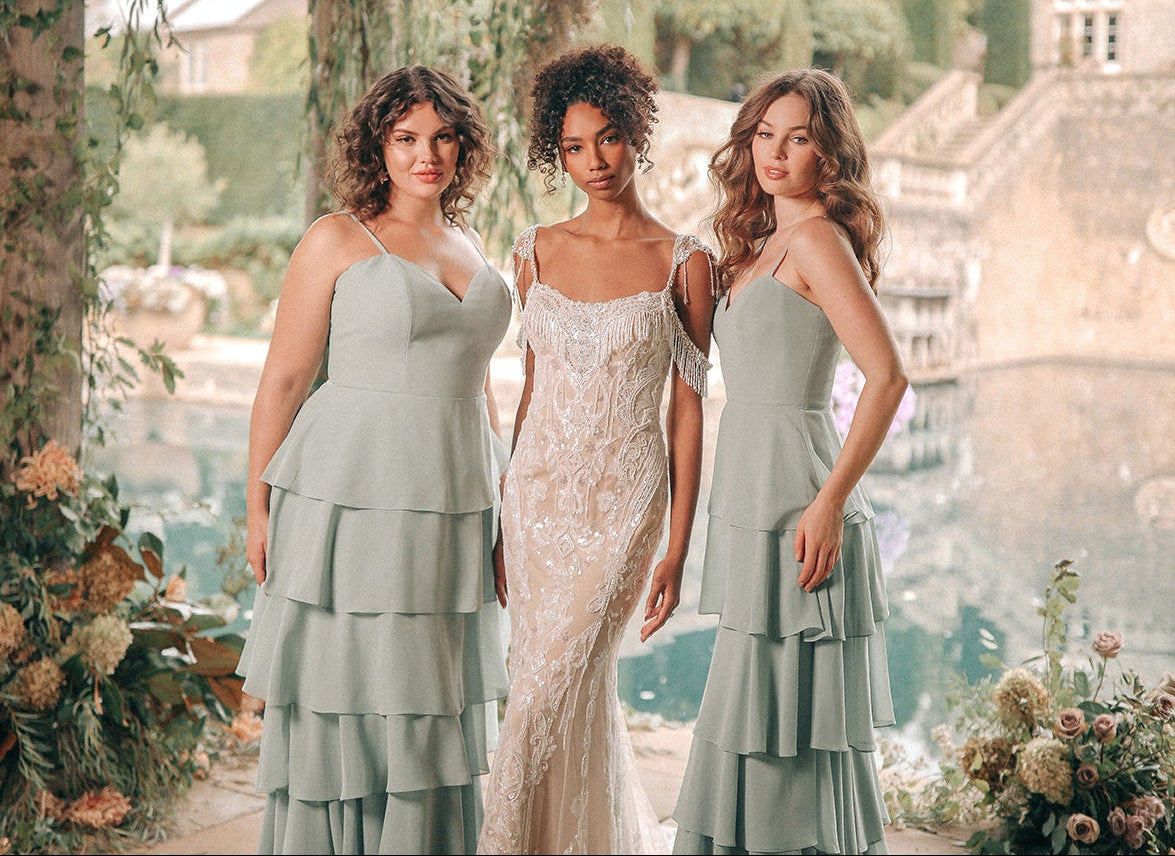
Consider your venue, season, wedding colors, level of formality, and bridal gown. A formal ballroom wedding may inspire sleek satin gowns or floor-length silhouettes, while an outdoor garden ceremony could pair beautifully with soft chiffon and romantic colors.
You don't need every wedding detail finalized before shopping, but having a general aesthetic will make it much easier to narrow your options.
2. Choose Your Bridesmaid Color Palette
Color is often one of the first major bridesmaid dress decisions a bride makes. Instead of simply selecting your favorite shade, consider how that color will work with your flowers, venue, décor, season, and photography style.
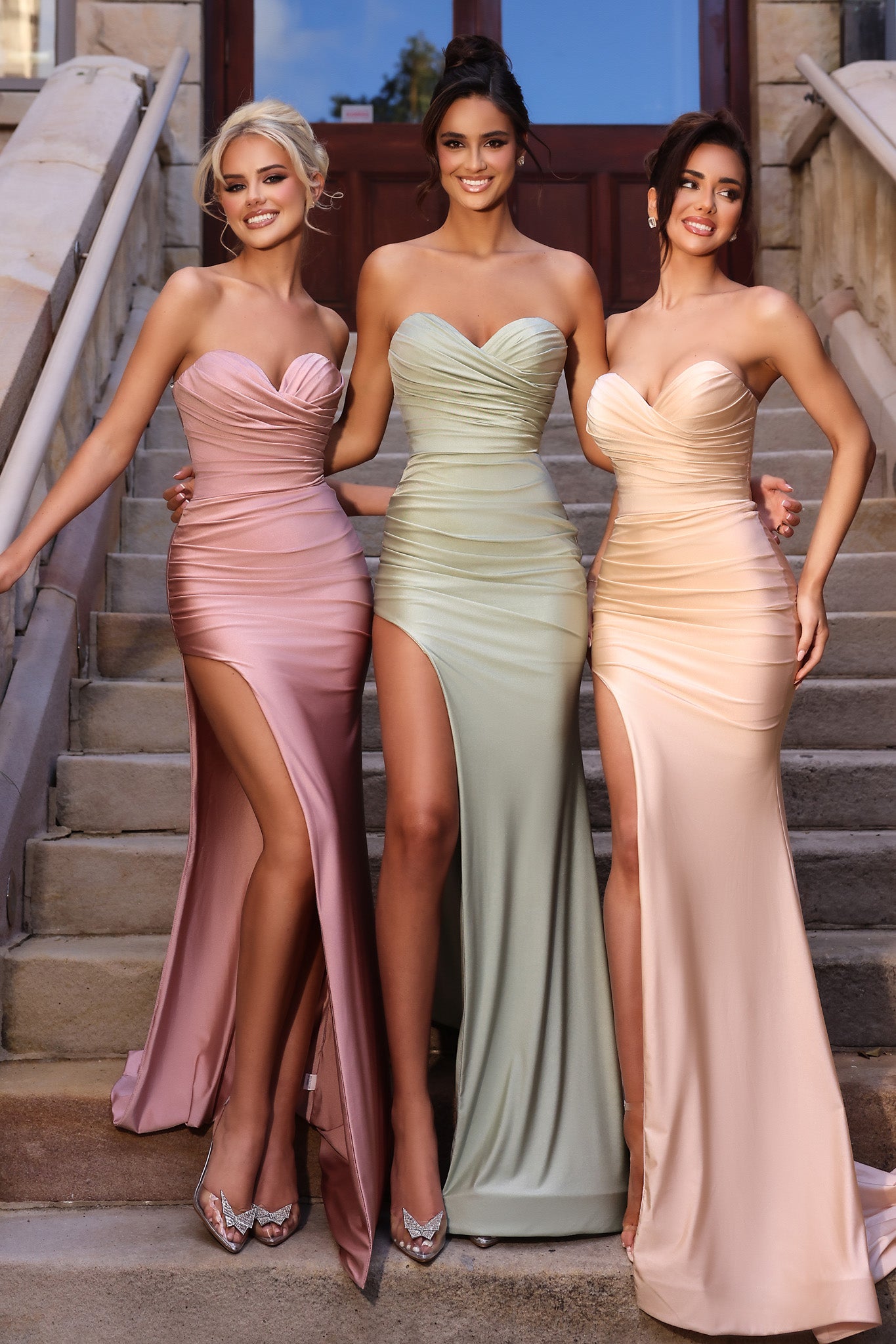
Rich shades such as Navy, Emerald, Burgundy, and Aubergine can create a dramatic effect, while Sage, Blush, Dusty Blue, Light Pink, and Dusty Lavender can produce a softer bridal party palette.
If you're deciding between similar shades, fabric swatches can be especially helpful. Colors may appear different online than they do in person, particularly across different fabrics and lighting conditions.
3. Decide Whether Your Bridesmaids Will Match
Do all bridesmaid dresses have to match? Absolutely not!
Some brides love the polished appearance of having everyone wear the same gown in the same color and fabric. Others prefer a mix-and-match bridal party where each bridesmaid selects a silhouette that suits her individual style.
You can also choose a middle ground. Select one color and fabric while allowing bridesmaids to choose different necklines or silhouettes. This creates consistency in wedding photos while giving everyone greater flexibility. Whatever approach you choose, establish the guidelines before everyone starts shopping.
4. Consider Different Body Types and Preferences
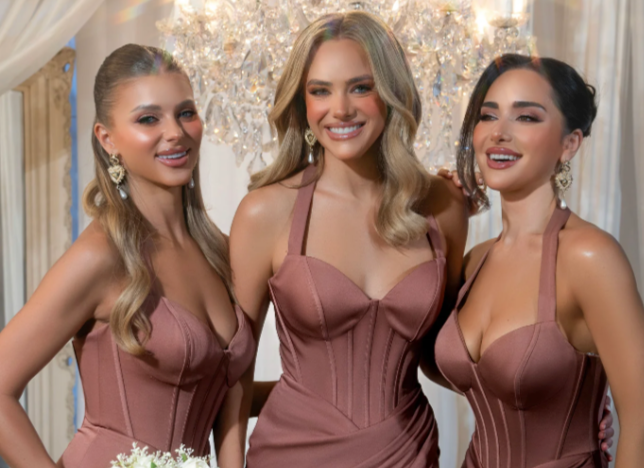
Your bridesmaids may have very different ideas about what makes them feel comfortable. One person may love a fitted silhouette, while another feels best in an A-line gown. Some may prefer straps or sleeves, while others love strapless, halter, or off-the-shoulder designs.
Giving your bridal party some flexibility can make it easier to create a look that feels cohesive while still allowing each person's personality to shine.
5. Pick the Right Bridesmaid Dress Fabric
Fabric affects much more than appearance. It influences how a gown drapes, moves, photographs, and feels throughout the wedding day.
Chiffon can create an airy, romantic effect, while satin offers a smooth, polished appearance that's ideal for modern or formal celebrations. Jersey can provide softness and flexibility while maintaining an elevated bridal party look.
Consider both your aesthetic and the practical experience of wearing the dress. Bridesmaids will be walking, sitting, posing for photos, eating, and dancing, so comfort deserves a place on the checklist too!
6. Create a Realistic Ordering Timeline
One of the biggest bridesmaid dress planning mistakes is waiting too long to order. Many formal gowns require production time before they're ready to ship. You also need additional time for delivery, trying on the dress, alterations, and final fittings.
Instead of treating the wedding date as your deadline, work backward and build in a comfortable buffer. Starting early gives your bridal party more flexibility if someone needs additional alterations or another unexpected issue arises.
7. Plan for Alterations
Do bridesmaid dresses usually need alterations? Often, yes.
Even when a bridesmaid orders the correct size, adjustments may be necessary to achieve the best fit. Hemming is particularly common with floor-length gowns because the final length depends on both the bridesmaid's height and her wedding shoes.
Encourage everyone to try on her dress as soon as it arrives rather than waiting until a few weeks before the wedding.
8. Coordinate Shoes and Accessories
Once the dresses are selected, start thinking about the details that complete the look. Decide how coordinated you want your bridesmaids to be. You might want everyone in the same shoes and jewelry, or simply establish guidelines such as nude shoes, metallic accessories, or minimalist jewelry.
Make sure bridesmaids select their wedding shoes before alterations so floor-length gowns can be hemmed correctly.
9. Keep Everyone Organized
Whether you use a shared spreadsheet, planning app, or group chat, keeping important details in one place can prevent last-minute confusion.
Your bridesmaid dress checklist should include:
-
Final dress color or palette
-
Approved dress styles
-
Fabric
-
Each bridesmaid's size
-
Order deadline
-
Expected arrival
-
Alteration appointments
-
Shoes
-
Jewelry and accessories
-
Final fitting
-
Wedding-day steaming or preparation
10. Prepare for the Wedding Day
A few weeks before the wedding, encourage each bridesmaid to complete her final fitting and confirm that she has her shoes and accessories.
Dresses should be stored properly so they remain clean and maintain their shape. Depending on the fabric, gowns may also need light steaming after transportation.
Having a steamer available where everyone is getting ready can be a lifesaver for unexpected wrinkles!
Bridesmaid Dress Planning FAQs
How far in advance should you start looking at bridesmaid dresses?
Starting approximately six to eight months before the wedding gives you time to explore colors, fabrics, silhouettes, and sizing before orders need to be placed.
Should bridesmaids order their dresses at the same time?
Ordering within a similar timeframe can help keep the bridal party on schedule. It's especially helpful when everyone is wearing the same dress, color, or fabric.
What should bridesmaids bring to alterations?
Bridesmaids should bring the shoes and undergarments they plan to wear on the wedding day. These can affect the length and overall fit of the dress.
How do you make bridesmaid dress shopping less stressful?
Start early, establish clear guidelines, communicate deadlines, and give bridesmaids flexibility where possible. A little organization at the beginning can prevent a lot of last-minute stress.
Bridesmaid dress planning is ultimately about more than creating beautiful wedding photos. These are the people you've chosen to stand beside you during one of life's biggest moments. With a thoughtful checklist and realistic timeline, you can create a bridal party look that complements your wedding vision while making the experience enjoyable for everyone!