
Choosing a bridesmaid dress color might seem as simple as finding the perfect shade on a color chart, but fabric can dramatically influence how that color actually appears. Satin can make a shade look rich and luminous, while chiffon may give the same color a softer, more romantic appearance. When shopping for bridesmaid dresses, understanding how different fabrics interact with color can help you create the bridal party look you envisioned.
Does fabric affect the color of a bridesmaid dress? Yes. The texture, weave, weight, transparency, and sheen of a fabric all influence how it reflects and absorbs light. Because of this, the same color can appear lighter, darker, brighter, softer, or more dimensional depending on the material.
That's especially important when creating a matching or mix-and-match bridal party. Before committing to a color, consider both the shade itself and the fabric in which it will be worn.
Why Does Fabric Change How a Color Looks?
We perceive color based partly on the way light interacts with a surface. Because different fabrics reflect light differently, they can alter our perception of the exact same shade.
A smooth, reflective material may make a color appear brighter or more saturated. A matte or sheer fabric may soften it. Texture can also create tiny variations in light and shadow that give a shade greater depth.
This means selecting "Sage," "Burgundy," or "Navy" isn't always the final color decision. The fabric plays an important role in determining how that shade will actually look.
How Does Satin Affect Bridesmaid Dress Colors?
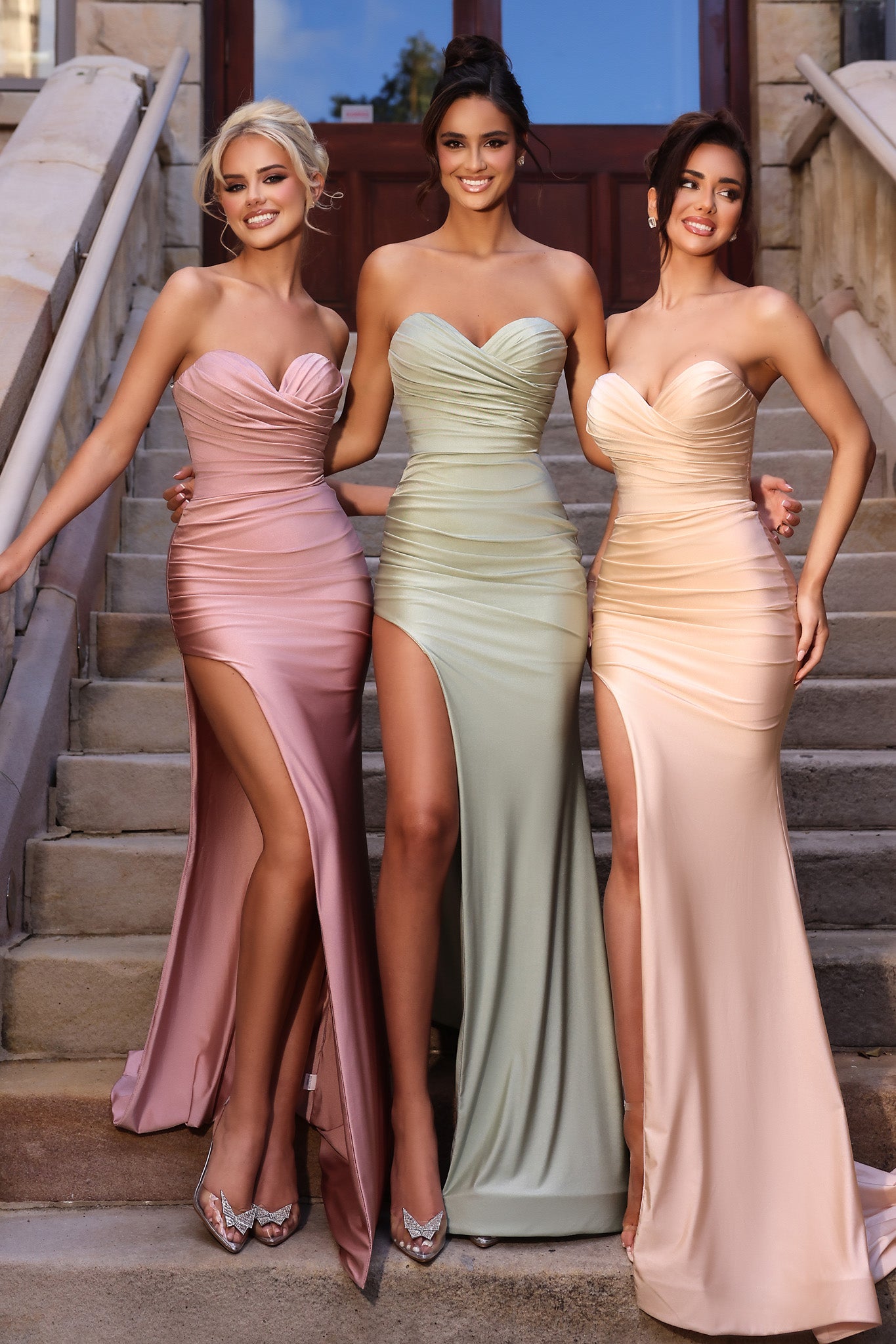
Satin is known for its smooth surface and beautiful sheen, which allows it to reflect more light than many other bridesmaid dress fabrics.
As a result, colors in satin can look particularly rich and dimensional. Deep shades may appear especially dramatic, while lighter colors can take on a luminous quality.
Satin also changes slightly as the wearer moves. Areas catching direct light may look brighter, while folds in the fabric appear darker. This creates the beautiful depth that makes satin so striking in photographs.
If you're planning a formal, modern, or evening wedding, that luminosity can help create an elevated bridal party aesthetic.
How Does Chiffon Affect Color?
Chiffon typically produces a softer visual effect.
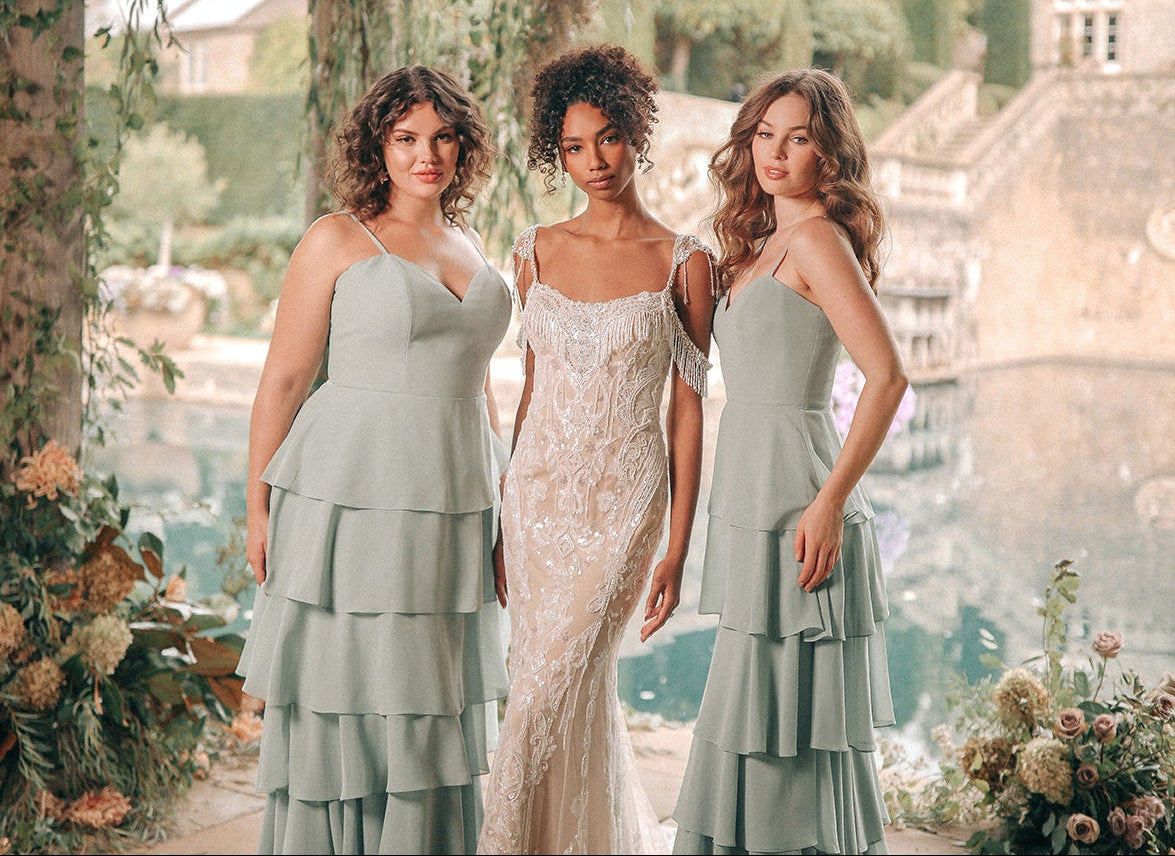
Because chiffon is lightweight and often layered, color can appear airy and slightly more diffused than it would on a smooth, opaque fabric. This characteristic makes chiffon especially popular for romantic weddings and softer color palettes.
Pastels and muted shades can look particularly delicate in chiffon, while darker shades retain their richness without necessarily having the reflective quality of satin.
The movement of chiffon also contributes to its appearance. As layers shift while bridesmaids walk, the color can gain subtle depth and variation.
How Does Jersey Affect Bridesmaid Dress Shades?
Jersey generally has a softer, less reflective finish than satin, creating a smoother and more consistent perception of color.
Because the fabric is known for its flexibility and drape, it can work particularly well for brides seeking a relaxed yet polished bridal party aesthetic.
Without a highly reflective surface, colors can appear more uniform across the gown. This can make jersey an appealing choice when you want the shade itself to remain the focus.
Can the Same Bridesmaid Color Look Different in Different Fabrics?
Absolutely, and this is particularly important for mix-and-match bridal parties.
Two gowns may technically have the same color name but look slightly different if they're made from different materials. A satin version may appear more luminous, while chiffon in the same shade may look softer or more muted.
This doesn't necessarily mean you shouldn't mix fabrics. In fact, subtle variations can create beautiful dimension across a bridal party.
The key is deciding whether you want an exact-match effect or an intentionally tonal look.
What Happens When You Mix Bridesmaid Dress Fabrics?
Mixing fabrics can create a sophisticated, layered bridal party aesthetic.
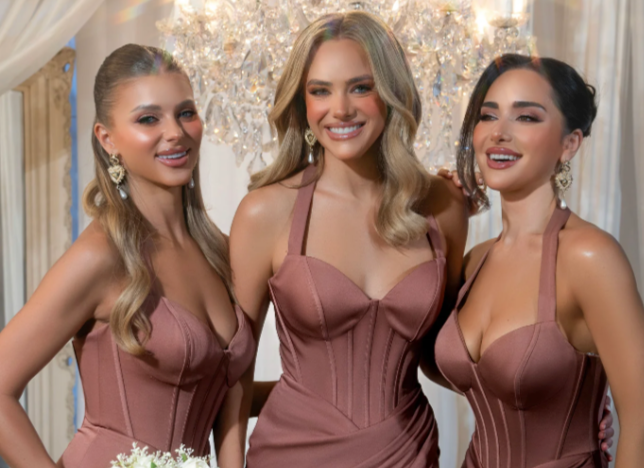
For example, combining satin and chiffon in one color family introduces texture while maintaining overall cohesion. The fabrics won't necessarily reflect light identically, but that variation can make the group look more interesting and intentional.
If you're planning a mix-and-match bridal party, establish a few consistent elements. You might keep everyone in the same color family and length while allowing variations in fabric and silhouette.
This gives bridesmaids individuality without making the finished group feel disconnected.
Why Lighting Matters When Choosing a Bridesmaid Color
Fabric isn't the only factor influencing how a shade appears. Lighting matters too.
Natural outdoor light, indoor lighting, candlelight, flash photography, and evening reception lighting can all affect color perception.
A shade that appears muted indoors may become brighter in direct sunlight. Satin may reflect warm reception lighting beautifully, while chiffon can create a softer effect in outdoor photographs.
Consider your venue and ceremony time when narrowing down colors and fabrics. You don't need to predict exactly how a dress will look in every lighting condition, but understanding that colors naturally shift can help set realistic expectations.
Should You Order Fabric Swatches?
If available, fabric swatches are one of the most useful tools for choosing bridesmaid colors.
Looking at a color online is a great starting point, but screens display colors differently. A physical swatch lets you see the actual fabric, texture, sheen, and shade in your own environment.
Try viewing swatches in natural daylight as well as indoor lighting. You can also place them beside other wedding elements such as floral inspiration, linens, or stationery.
If you're considering multiple fabrics, compare those swatches side by side rather than assuming the same color name will appear identical across materials.
How Does Fabric Affect Bridesmaid Photos?
Your bridesmaid dresses will appear in some of the most important photographs of your wedding, making fabric an important part of your overall visual plan.
Reflective fabrics such as satin can create highlights and shadows that emphasize movement and draping. Softer fabrics like chiffon tend to create a more diffused, romantic effect.
Neither is inherently better for photography. The right choice depends on the aesthetic you're trying to create.
A modern city wedding might look beautiful with sleek satin gowns, while chiffon could complement a romantic outdoor ceremony. Think of fabric as part of your wedding's overall visual language rather than simply the material used to make the dress.
Bridesmaid Dress Fabric and Color FAQs
Does satin make colors look darker?
Not necessarily. Satin's reflective surface creates highlights and shadows, meaning the same dress can appear lighter in some areas and deeper in others depending on the lighting.
Can bridesmaids wear the same color in different fabrics?
Yes. Different fabrics in the same color family can create a dimensional mix-and-match look. Just expect slight variations in how each material displays the shade.
Why does my bridesmaid dress color look different online?
Screens, photography, editing, lighting, and fabric texture can all influence how a color appears digitally. Physical swatches can provide a more accurate reference.
Should all bridesmaid dresses be the same fabric?
No. Matching fabrics create a very uniform look, but mixing materials can be equally beautiful when the colors and overall styling are coordinated.
Think Beyond the Color Name
Finding the perfect bridesmaid color isn't only about choosing a shade from a list. Fabric, texture, lighting, and movement all contribute to how that color ultimately appears.
By considering fabric and color together, you can create a bridal party palette with more depth and intention. Whether you prefer luminous satin, romantic chiffon, soft jersey, or a thoughtful mix of textures, the right combination can help bring your entire wedding aesthetic together.