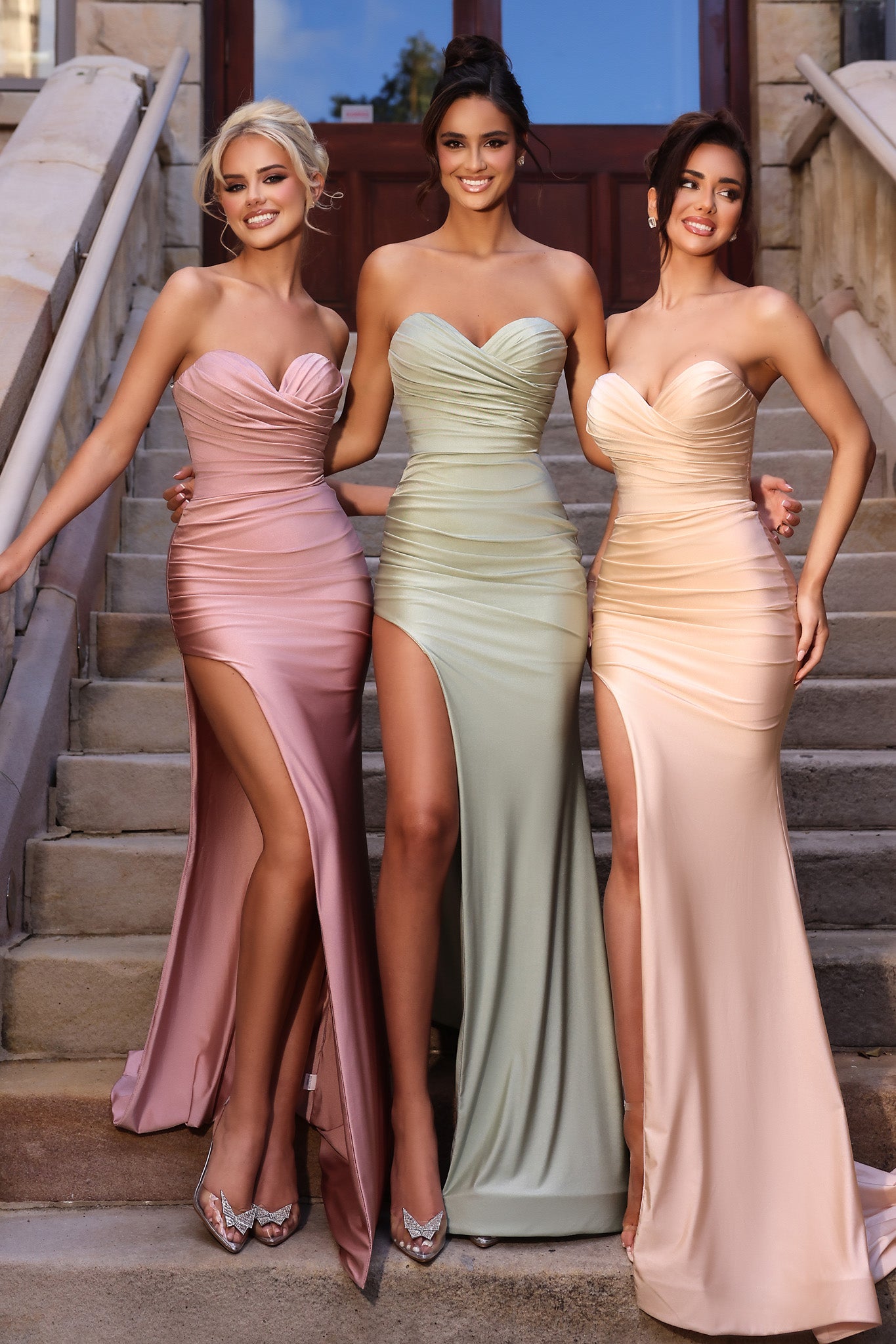
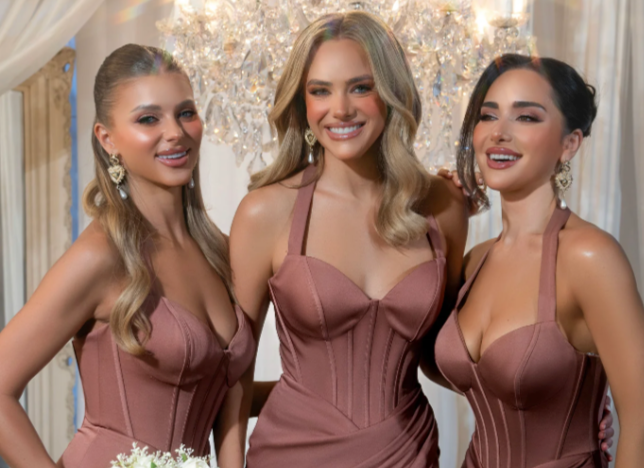
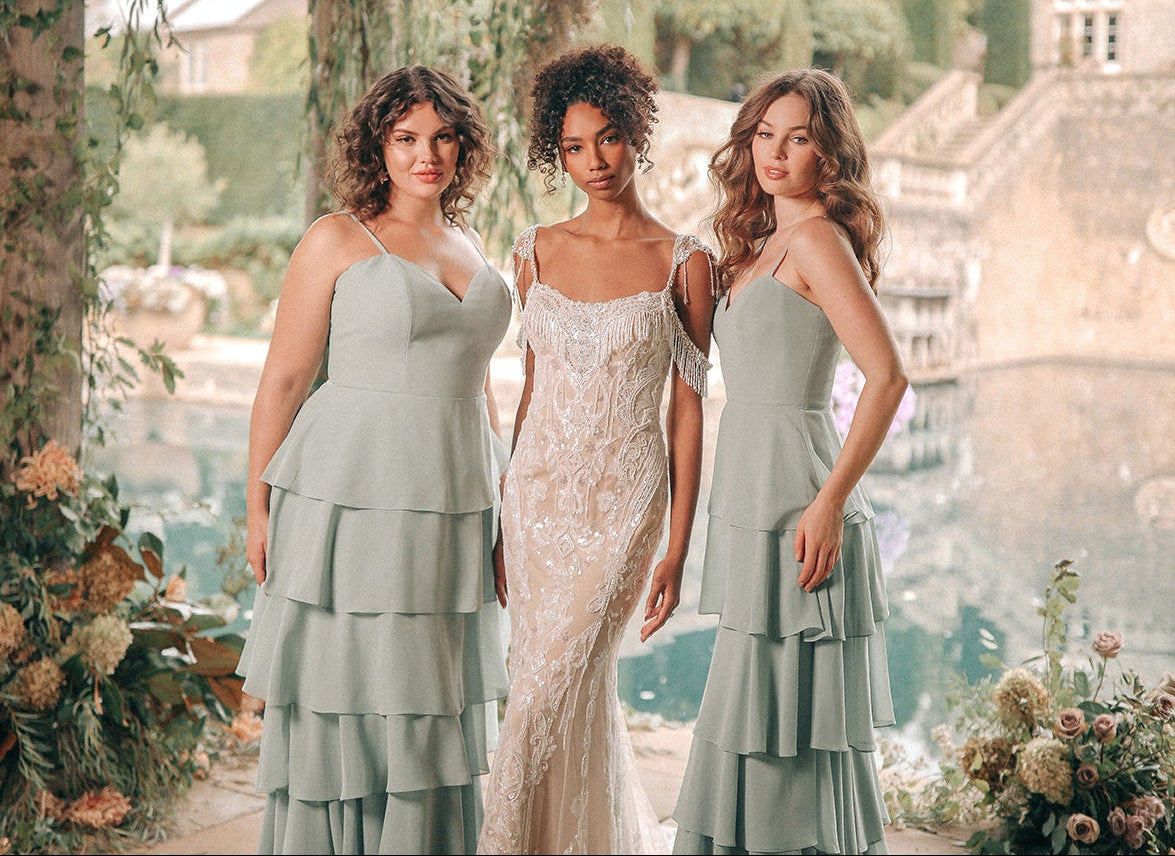

A bridesmaid collection begins long before the final gowns appear online or in a bridal boutique.
Designers move from inspiration and sketches to fabric selection, color development, patternmaking, samples, fittings, and production before the dresses reach the wedding party.
Creating chic bridesmaid dresses also requires thinking beyond one individual gown. A successful collection should offer enough variety for bridesmaids to find flattering options while still looking cohesive together.
Every Collection Begins With a Direction
Before individual dresses are designed, the collection needs an identity.
The creative direction might focus on minimalism, romantic draping, sleek satin, modern necklines, relaxed movement, or another overall aesthetic. Designers also consider how bridal parties are changing.
Many brides now want a coordinated look without requiring every bridesmaid to wear the exact same gown. That means a collection needs variety while still maintaining a clear visual connection.
Silhouettes Are Developed Together
A collection needs more than one shape.
Some bridesmaids feel best in an A-line gown, while others prefer a fitted sheath, mermaid silhouette, or softer flowing design. Designers consider how these different shapes will look together in photographs and during the ceremony.
Even when the silhouettes vary, repeated elements such as fabric, color, or design details can keep the group connected.
Necklines Give Each Dress Personality
The neckline can completely change the mood of a bridesmaid gown.
A cowl neckline feels soft and fluid. A square neckline can feel contemporary. A halter creates a sleeker look, while an off-the-shoulder design leans more romantic.
Offering several neckline options allows bridesmaids to select styles that feel comfortable and flattering while still fitting within the bride's overall vision.
Fabric Changes the Design
The same dress can feel completely different depending on the fabric.
Satin emphasizes draping and creates a subtle sheen.
Chiffon offers lighter movement.
Jersey can provide softness and stretch.
Designers consider the behavior of each material when deciding which silhouettes and details it should be used for. Fabric is not simply the surface of the dress. It influences the entire design.
How Are Bridesmaid Dress Colors Selected?
Color development is an important part of creating a collection.
Designers may consider established wedding palettes as well as newer fashion and event trends. A strong range should include options for different seasons and aesthetics.
Soft colors may suit garden and spring weddings, while deeper jewel tones can work beautifully for formal fall and winter events.
The goal is to create enough variety without making the collection feel disconnected.
Why Does Color Look Different in Different Fabrics?
Different materials reflect light differently.
A shade in satin may appear richer or shinier than the same color in chiffon.
Jersey may create yet another effect.
That is why fabric swatches can be so useful when coordinating a bridal party. Seeing the material in person makes it easier to understand both the exact shade and the texture.
Small Details Give Each Dress Individuality
Once the silhouette and fabric are established, smaller elements can help make each style unique.
Designers might incorporate:
-
Ruching
-
Pleating
-
Slits
-
Bows
-
Ruffles
-
Cutouts
-
Asymmetric draping
-
Back details
-
Adjustable elements
The goal is not to include everything on one dress.
Each gown should interpret the collection's overall aesthetic in a slightly different way.
What Happens During the Sample Stage?
The first sample allows the design team to see how the gown actually works on the body.
A detail that looked beautiful in a sketch may need to change. A bow may need to become smaller. The neckline could require adjustment. A slit might need to move. The skirt may need more or less volume.
The sample stage helps turn the original idea into a wearable garment.
Why Are Fittings Important?
A bridesmaid dress must work in motion.
The wearer needs to walk down the aisle, sit, hug guests, pose for photographs, and dance. During fittings, teams can evaluate whether straps stay in place, the neckline sits correctly, and the gown allows comfortable movement.
Those adjustments are part of creating a dress that works beyond the photograph.
How Do Designers Think About Different Body Types?
A bridal party rarely includes people with identical proportions.
That means collections need enough variety to give different people options.
Some bridesmaids may feel most comfortable with straps, while others prefer a halter or off-the-shoulder style. Some may want a flowing A-line while others choose a more fitted silhouette. Offering a range of shapes helps the wedding party maintain a cohesive look without expecting one dress to work exactly the same way for everyone.
How Does a Collection Finally Reach Bridesmaids?
Once the designs have been developed, fitted, finalized, and produced, they become available for brides and their wedding parties to shop.
At that point, the collection becomes personal. A bride may choose one gown for everyone or select a color and allow each person to pick her preferred silhouette.
The dresses that began as sketches eventually become part of the ceremony, photographs, and memories of a real wedding.
Why Do Bridesmaid Collections Need to Work as a Group?
A strong collection should feel more like a wardrobe than a random assortment of dresses.
The silhouettes may differ, but something should connect them. That could be color, fabric, construction, neckline direction, or overall mood.
This is what makes mix-and-match styling possible without creating a bridal party that feels visually disconnected.
Explore chic bridesmaid dresses from Dollhouse Bridesmaids to find modern silhouettes and coordinated options designed to work beautifully both individually and as part of a wedding party!