
For generations, matching bridesmaid dresses were practically expected. One bride chose one gown, one color, and every member of the bridal party wore it. Today's weddings offer far more freedom. While perfectly matching wedding bridesmaid gowns can still create a beautiful and timeless look, brides can also coordinate different silhouettes, necklines, fabrics, or even colors to create a bridal party that feels cohesive without being identical.
Do bridesmaids need to wear the same dress? No. Bridesmaids can wear identical gowns, different styles in the same color, complementary colors, or even different fabrics. The key to a successful mismatched bridal party is establishing a few consistent elements—such as color family, length, fabric, or formality—so the final look feels intentional.
The best approach depends on your wedding aesthetic and how much choice you want to give your bridesmaids.
Why Do Bridesmaids Traditionally Match?
Matching bridesmaid dresses create immediate visual unity.
When everyone wears the same color, fabric, and silhouette, there's no question that the bridal party belongs together. The effect can look particularly polished in ceremony and group photographs.
Matching gowns also simplify some decisions. Instead of coordinating several silhouettes or shades, the bride selects one style for the entire group.
For brides who love symmetry and consistency, there's absolutely nothing outdated about choosing identical dresses.
What Are the Benefits of Different Bridesmaid Dresses?
The biggest advantage of allowing different dresses is flexibility.
Bridesmaids can have different heights, body types, style preferences, and comfort levels. A neckline one person loves may not make another person feel confident.
Allowing multiple silhouettes gives each bridesmaid an opportunity to choose a gown that works for her while still participating in the overall wedding aesthetic.
It can also create more visual dimension in photographs and give the bridal party a modern, editorial feel.
Option 1: Same Color, Different Dresses
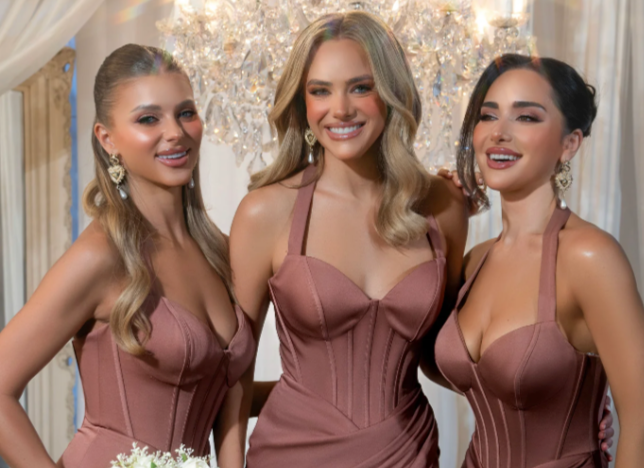
One of the easiest ways to create a mismatched bridal party is choosing one color and allowing several silhouettes.
This maintains strong visual consistency because the color connects everyone, while differences in neckline or shape add personality.
For even greater cohesion, keep the fabric and dress length consistent too.
For example, everyone might wear floor-length satin gowns in the same shade while choosing among halter, one-shoulder, strapless, or V-neck styles.
This approach offers individuality without requiring the bride to coordinate an entire palette.
Option 2: Same Fabric, Different Necklines
If you want an especially polished mix-and-match look, keep both the color and fabric consistent while varying only the design.
This allows each bridesmaid to choose a neckline and silhouette that makes her feel comfortable.
Because the fabric reflects light consistently across the group, the dresses tend to photograph cohesively even when their designs are different.
It's a great middle ground for brides who like the concept of matching dresses but want to offer their bridal party more choice.
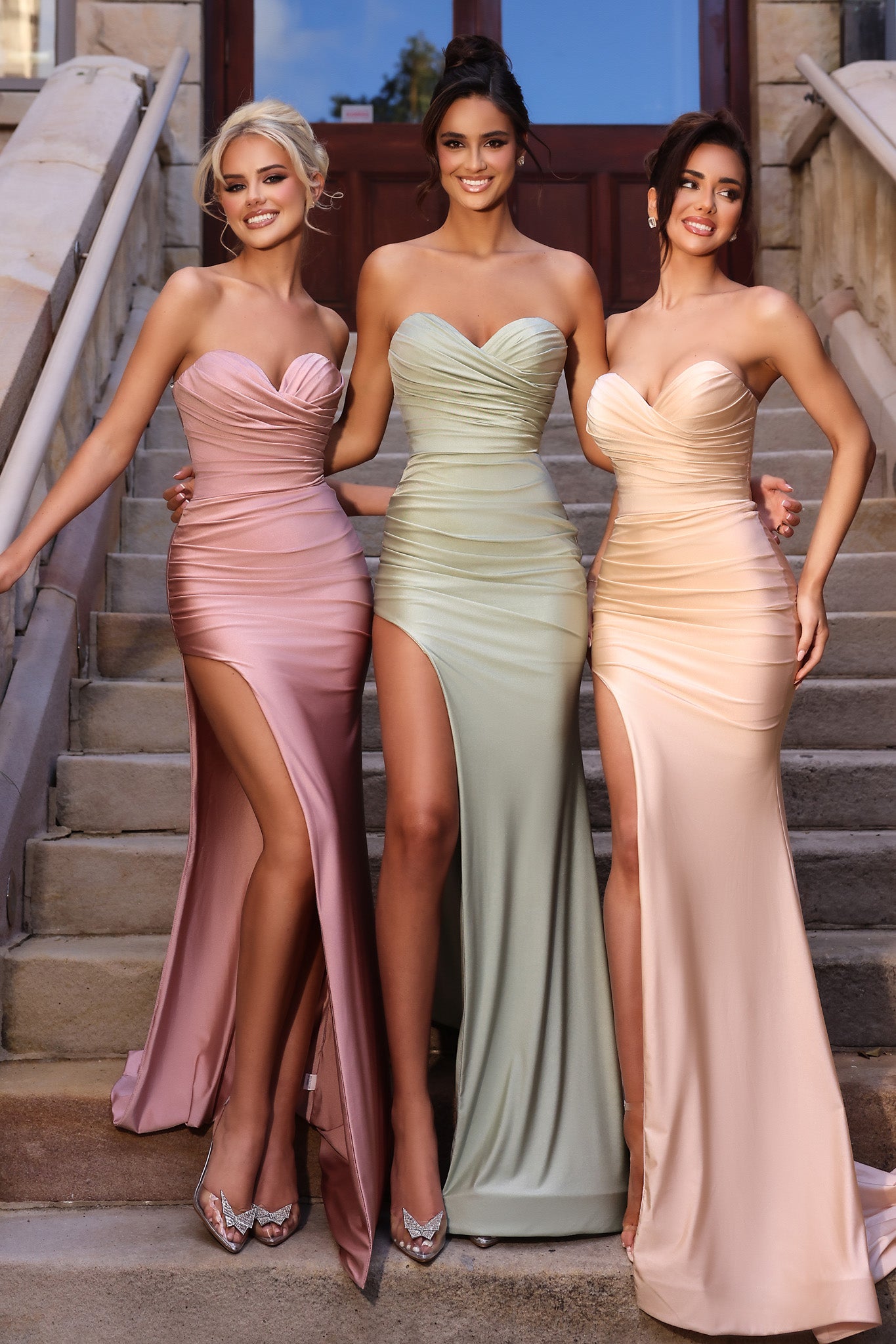
Option 3: Different Shades in One Color Family
A tonal bridal party can create a softer, layered effect.
Instead of selecting one exact shade, choose a family of complementary colors. Depending on the wedding palette, that might mean variations of pink, blue, green, purple, or neutral tones.
The key is controlling the palette enough that the differences look deliberate.
Giving bridesmaids a defined group of approved shades usually works better than simply asking everyone to "find a green dress." Without guidelines, undertones and levels of formality can vary dramatically.
Option 4: Different Fabrics
Mixing fabrics adds texture to the bridal party.
Satin, chiffon, and jersey interact with light differently, meaning even similar shades can have slightly different appearances. That variation can create beautiful visual depth.
If you're mixing fabrics, consider keeping another element consistent, such as color family or dress length.
The more elements you vary, the more important it becomes to have something visually connecting the group.
How Many Things Should Match?
There isn't a strict rule, but having at least one or two consistent elements can help a mismatched bridal party feel intentional.
Those elements might include:
-
Color or color family
-
Fabric
-
Dress length
-
Level of formality
-
Silhouette family
-
Accessories
-
Flowers
You don't need to match all of them.
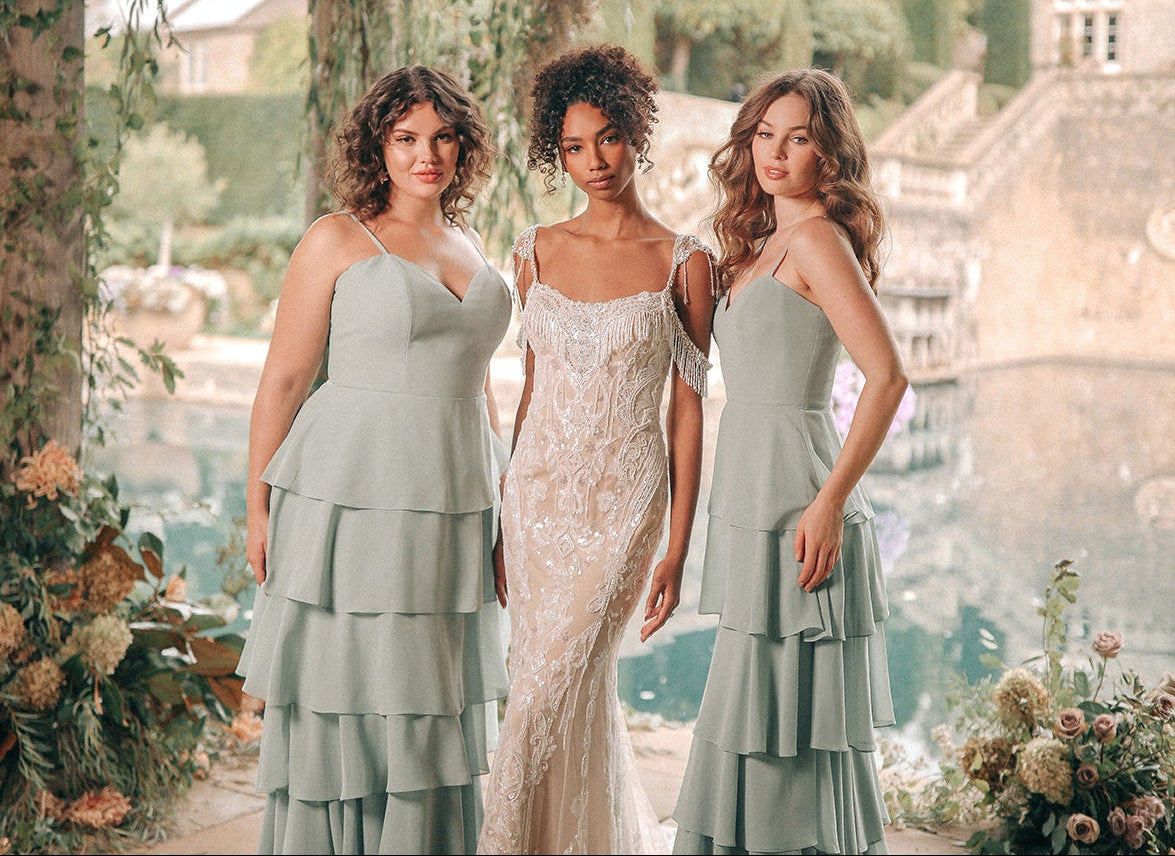
For example, different colors and silhouettes can still look cohesive if all the dresses are floor-length and have the same overall level of formality.
Think of coordination as creating visual boundaries rather than enforcing identical outfits.
Should Every Bridesmaid Choose Her Own Dress?
You can absolutely let bridesmaids choose their dresses, but some direction is helpful.
Instead of saying, "Wear whatever you want," establish parameters.
Tell them the approved colors, fabrics, lengths, or styles. If you're shopping from one collection, you can even create a shortlist of dresses and let each bridesmaid select her favorite.
This gives your bridal party meaningful choice while preventing surprises when everyone finally stands together.
What If Two Bridesmaids Want the Same Style?
That's completely fine!
A mix-and-match bridal party doesn't require every dress to be unique. If two people feel best in the same gown, there's no reason they can't both wear it.
The goal is to give bridesmaids options, not to create artificial differences.
Repeating a silhouette can actually help reinforce cohesion throughout a larger bridal party.
How Do You Know If Mismatched Bridesmaid Dresses Work Together?
Before everyone orders, look at the dresses together.
Save product images in one document, create a digital mood board, or compare the gowns side by side. If you're working with physical swatches, view those together as well.
Ask whether the dresses appear to belong at the same wedding.
Are some dramatically more formal than others? Does one color clash with the rest? Is one gown covered in detail while all the others are minimalist?
Looking at the group as a whole can reveal inconsistencies that aren't obvious when evaluating dresses individually.
Matching vs. Mismatched Bridesmaid Dress FAQs
Is it okay for bridesmaids to wear different dresses?
Yes. Different dresses can look polished and cohesive when they're connected through color, fabric, length, formality, or another shared design element.
Should bridesmaid dresses all be the same length?
They don't have to be, although consistent lengths can make a mix-and-match bridal party look more unified.
Can bridesmaids wear different colors?
Absolutely. Choose a defined palette of complementary shades and consider comparing swatches before dresses are ordered.
Should the maid of honor wear a different dress?
She can, but it's optional. Some brides distinguish the maid of honor with a different shade, neckline, fabric, or accessory, while others keep the entire bridal party coordinated equally.
Are matching bridesmaid dresses outdated?
Not at all. Matching dresses remain a timeless choice. The difference today is simply that brides have more alternatives available.
There Is No One Right Way To Match
Bridesmaid fashion has become much more flexible, and that's good news for both brides and bridal parties.
If you love the clean, unified appearance of identical dresses, embrace it. If you want each bridesmaid to express a little more personality, choose a mix-and-match approach. You can also land somewhere between the two by keeping color and fabric consistent while varying silhouettes.
The goal isn't to follow a rule about what bridesmaids are "supposed" to wear. It's to create a group that complements your wedding and helps the people standing beside you feel confident.
Whether every dress matches perfectly or each one is slightly different, thoughtful coordination is what ultimately makes a bridal party look like it belongs together!