
Shopping for bridesmaid dresses is an exciting part of wedding planning, but finding the right fit can sometimes feel overwhelming. With different body types, sizing charts, fabrics, and silhouettes to consider, understanding how bridesmaid dresses are designed to fit can make the process significantly easier. Whether you're shopping in person or browsing an online bridesmaid dress store, knowing what to expect before you buy can help you select a dress that looks beautiful, feels comfortable, and requires minimal alterations.
Many bridesmaids assume they should order the same size they wear in everyday clothing, but formalwear sizing often works differently. Bridesmaid dresses are typically constructed with fit, structure, and special occasion styling in mind, which means understanding measurements is far more important than focusing on the number listed on the tag.
Taking a little extra time to understand fit before ordering can help reduce stress, avoid costly mistakes, and ensure you feel confident on the wedding day.
Bridesmaid Dress Sizing Is Different From Everyday Clothing
One of the most common surprises bridesmaids encounter is that formalwear sizing rarely matches ready-to-wear clothing sizes.
Many women who typically wear one size in jeans or casual dresses discover they need a different size in a bridesmaid gown. This isn't because anything is wrong with their body or the dress itself. Formalwear brands simply use different sizing standards than many retail clothing companies.
For this reason, measurements should always take priority over your usual clothing size.
The three most important measurements are:
-
Bust
-
Waist
-
Hips
These measurements provide the most accurate starting point when selecting a bridesmaid dress size. Because every body is unique, it's common for a bridesmaid to fall into different size categories for different measurements. In those situations, sizing up is often the safest option since alterations can typically take a dress in more easily than letting it out.
Why Accurate Measurements Matter
Accurate measurements are the foundation of a successful dress purchase.
Even the most beautiful gown can feel uncomfortable or look less flattering if the fit isn't correct. Taking professional measurements—or carefully measuring yourself at home—helps ensure the dress is ordered as close to your size as possible.
When taking measurements:
-
Wear lightweight clothing
-
Stand naturally
-
Keep the measuring tape level
-
Avoid pulling the tape too tightly
-
Measure more than once for accuracy
Because bridesmaid dresses are often made to order, ordering the correct size from the beginning can help avoid unnecessary alteration costs later.
A few extra minutes spent measuring can save weeks of frustration during the wedding planning process.
Understanding How Different Fabrics Fit
Fabric plays a major role in how a bridesmaid dress fits and feels. Some fabrics provide structure and hold their shape, while others offer flexibility and movement. Understanding these differences can help you choose a dress that aligns with your comfort preferences.
Stretch Satin
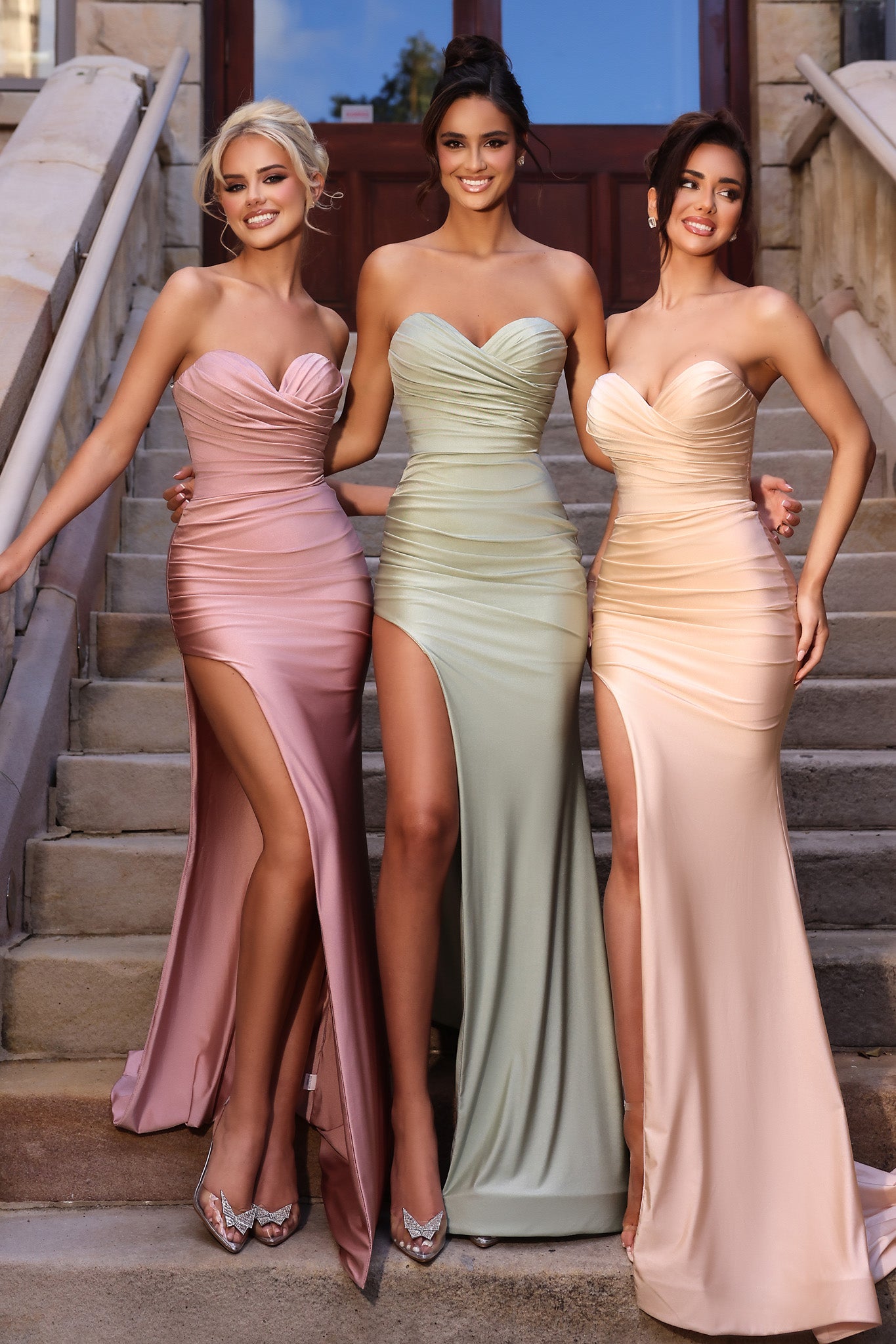
Stretch satin combines the luxurious appearance of traditional satin with additional flexibility. The slight stretch allows the fabric to move with the body while maintaining a sleek, polished appearance.
Benefits include:
-
Comfortable fit
-
Elegant sheen
-
Smooth silhouette
-
Improved flexibility
Stretch satin is often a favorite for bridesmaids who want a fitted look without feeling restricted.
Chiffon
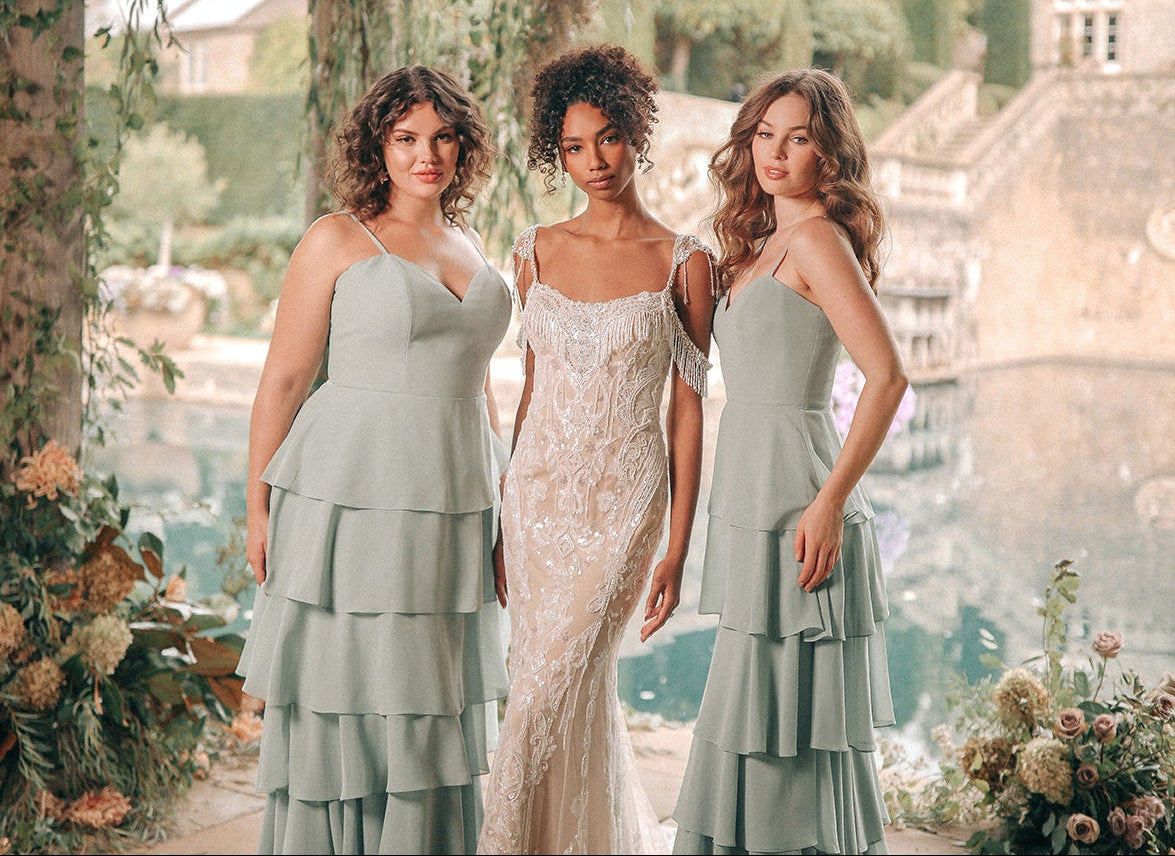
Chiffon is known for its lightweight, airy drape. This fabric tends to skim over the body rather than cling to it, making it one of the most universally flattering options for bridal parties.
Benefits include:
-
Soft movement
-
Breathability
-
Lightweight feel
-
Romantic appearance
Chiffon works particularly well for outdoor weddings and warm-weather celebrations because of its comfort and versatility.
Stretch Jersey
Stretch jersey offers exceptional comfort and flexibility. Because the fabric naturally contours to the body, it allows for easy movement throughout the day while maintaining a flattering silhouette.
Benefits include:
-
Comfortable stretch
-
Easy movement
-
Smooth fit
-
Wrinkle resistance
Many bridesmaids appreciate jersey fabrics because they feel effortless to wear during long wedding days.
Choosing a Silhouette That Works for Your Body Type
The silhouette of a bridesmaid dress has a significant impact on how it fits. While every body is different, certain silhouettes offer specific benefits depending on your preferences and proportions.
A-Line Dresses
A-line gowns are fitted through the bodice and gradually flare outward from the waist.
These dresses are popular because they:
-
Define the waist
-
Create balanced proportions
-
Offer comfortable movement
-
Flatter many body types
A-line silhouettes remain one of the most requested bridesmaid styles because of their versatility and timeless appeal.
Fit-and-Flare Styles
Fit-and-flare dresses follow the body's natural shape before opening slightly below the hips.
These styles create:
-
Defined curves
-
Elegant structure
-
Modern sophistication
-
Balanced proportions
Bridesmaids looking for a slightly more fitted appearance often gravitate toward fit-and-flare silhouettes.
Flowing Silhouettes
Flowing gowns prioritize movement and comfort.
These dresses often feature:
-
Lightweight fabrics
-
Soft draping
-
Relaxed construction
-
Romantic styling
Flowing silhouettes are especially popular for destination weddings, beach ceremonies, and outdoor celebrations.
Why Alterations Are Completely Normal
Many bridesmaids assume ordering the correct size means no alterations will be needed. In reality, alterations are a standard part of formalwear. Most dresses are designed with the expectation that some adjustments may be made to create the best fit possible.
Common alterations include:
-
Hem adjustments
-
Strap shortening
-
Waist refinement
-
Bust adjustments
-
Taking in side seams
Because everyone has unique proportions, alterations help transform a dress from "close enough" to perfectly fitted. The goal isn't perfection straight from the box—it's creating a fit that feels comfortable and confident.
Length Is One of the Most Common Adjustments
One of the most frequently altered areas of a bridesmaid dress is the hem. Formal gowns are typically designed with extra length so they can accommodate a variety of heights and shoe choices.
Several factors affect the ideal hem length:
-
Height
-
Shoe heel height
-
Wedding venue
-
Personal preference
For example, a bridesmaid wearing flat sandals for a beach wedding may require a different hem length than someone wearing high heels for a ballroom celebration. When possible, bring your wedding-day shoes to alteration appointments to ensure the final hem is correct.
Don't Ignore Comfort
While appearance is important, comfort matters just as much.
Bridesmaids spend hours wearing their dresses throughout the wedding day. Between photos, ceremonies, dinners, speeches, and dancing, a gown should feel as good as it looks.
When evaluating fit, consider:
-
Can you sit comfortably?
-
Can you raise your arms?
-
Can you walk naturally?
-
Can you dance comfortably?
-
Does the dress stay in place?
A dress that feels restrictive during a quick fitting may become significantly more uncomfortable after several hours of wear. Choosing a silhouette and fabric that supports movement can make a huge difference in your overall experience.
Ordering Early Helps Reduce Stress
One of the easiest ways to ensure a successful fit is allowing enough time. Many bridesmaid dresses are made to order and require production time before shipping. Alterations may also require several appointments depending on the adjustments needed.
Ordering early provides time for:
-
Production
-
Shipping
-
Exchanges if necessary
-
Alterations
-
Final fittings
Waiting until the last minute often limits options and increases stress. A well-planned timeline allows you to focus on enjoying the wedding experience rather than worrying about dress logistics.
Confidence Starts With the Right Fit
The perfect bridesmaid dress isn't just about color, trend, or silhouette. It starts with a fit that allows you to feel comfortable, supported, and confident throughout the celebration.
Understanding formalwear sizing, taking accurate measurements, choosing fabrics thoughtfully, and anticipating minor alterations can make the entire shopping process smoother and more enjoyable. Rather than focusing solely on the size printed on the label, prioritize how the dress fits your body and how it makes you feel when you wear it.
By approaching the process with realistic expectations and a focus on proper fit, you'll be well-prepared to find a bridesmaid dress that looks beautiful in photographs, feels comfortable from morning to night, and allows you to fully enjoy every moment of the wedding celebration!